Show ticket
Entry to the Chongqing 1949 show, about 75 minutes at the Chongqing 1949 Grand Theater. Start times are in the calendar, and the ticket is marked skip the ticket line.
See dates ↗
Immersive theatre · Chongqing
A 360-degree rotating stage takes you from a Ciqikou wharf to a prison cell and a rising ship.
A theatre built for this one show, with room for nearly 1,500 people around the turning stage.
The show
Chongqing 1949 plays in its own building in the Ciqikou area of Shapingba, on the west bank of the Jialing River. The designers give a total construction area of about 25,000 square metres, and China Daily reported that the production premiered there in 2021. The architects' account says the building was completed that year. The theatre and the show are one project, not a performance moved into an older hall.
The set does not stay in front of you. The stage is a set of rotating rings, five of them according to the producer, and a travel guide to the show says the outer two carry both performers and audience. The ticket text describes a 360-degree rotating stage joined to the auditorium, with 3D sound and a panoramic audio-visual display. The story reaches you from different directions as the rings turn, and what you see depends in part on where you sit.
The play is set in Ciqikou on the eve of Chongqing's liberation in 1949, in the production's own wording. An encyclopedia entry lists four threads: the conflicting choices of three brothers, prisoners held at Zhazidong and Baigongguan, an underground rescue effort and the children of the prison. Those two prison sites in the Gele Mountains are now museums. Treat the show as a stage drama built on that history and told from its makers' point of view.
The turning stage
According to the show's producer, the stage is made of five rings that turn independently, changing the scene as they move. These are the places the ticket text says the rings carry you through.
The wharf
The first world is a wharf town: wooden stilted buildings and stone steps, built at full scale around the audience. The ticket text mentions the damp air of the dock and the calls of vendors from the old street, delivered through 3D sound.
The ship
A huge ship hull rises slowly from one side of the stage under blue light, with the sound of waves. The ticket text ties the image to the revolutionaries' decision to set sail on the Jialing River.
The brothers
The three Lin brothers confront one another in different areas of the rotating stage, and the audience turns with the rings, so each argument is seen from another side. An encyclopedia entry lists their conflicting choices as one of the play's four threads.
The prison
The prison scenes are set in Zhazidong. The ticket text lists iron bars and the leather boots of guards on stone slabs among the set and the sound. Zhazidong and Baigongguan, the two sites the play draws on, stand in the Gele Mountains and are now museums.
The child
In one scene a child in the prison holds a wild flower and looks up at the iron window, and the ticket text says the starlight above the stage slowly falls. The encyclopedia entry lists the children who survived imprisonment as a thread of the play.
A travel guide says rings one to three hold the main scenery and rings four and five hold both audience and action. The production decides the order and the detail of its scenes, treat this as a map of what the show says it stages, not as a running order.
The theatre
The building is part of the show, so it helps to know what it is and where it stands.
The city outside
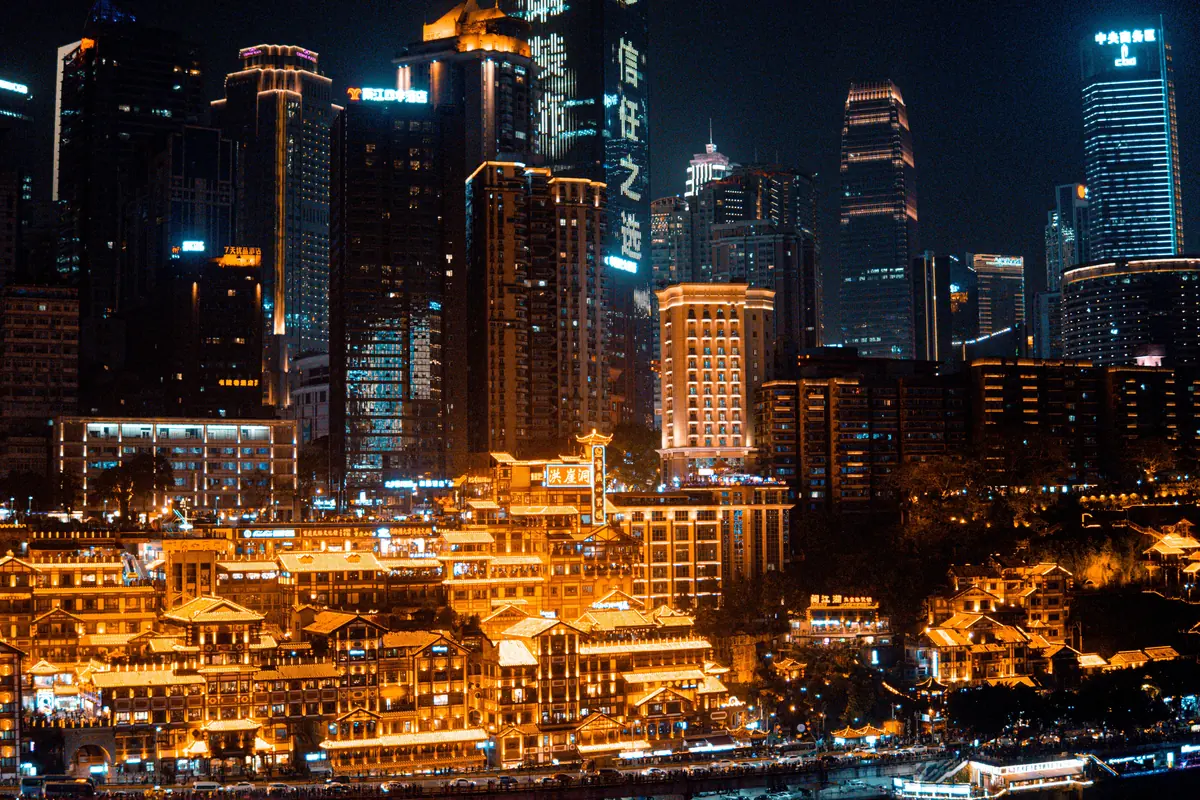
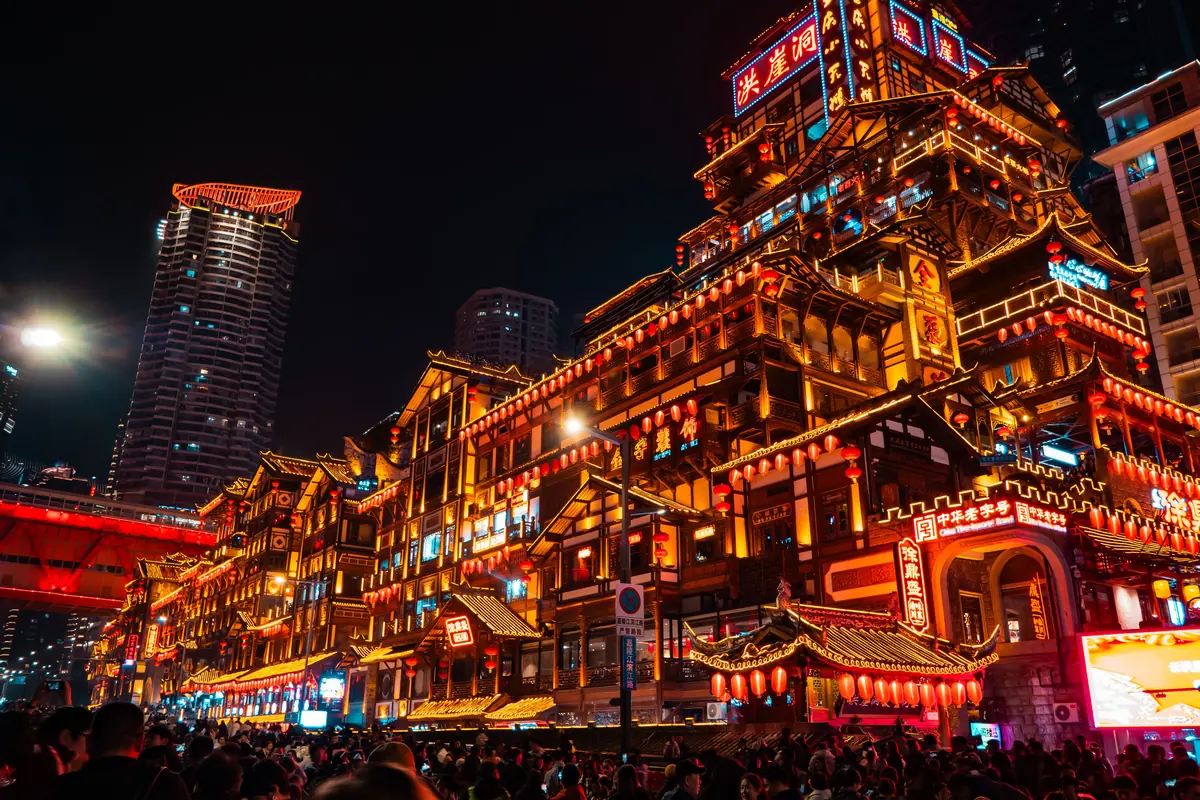
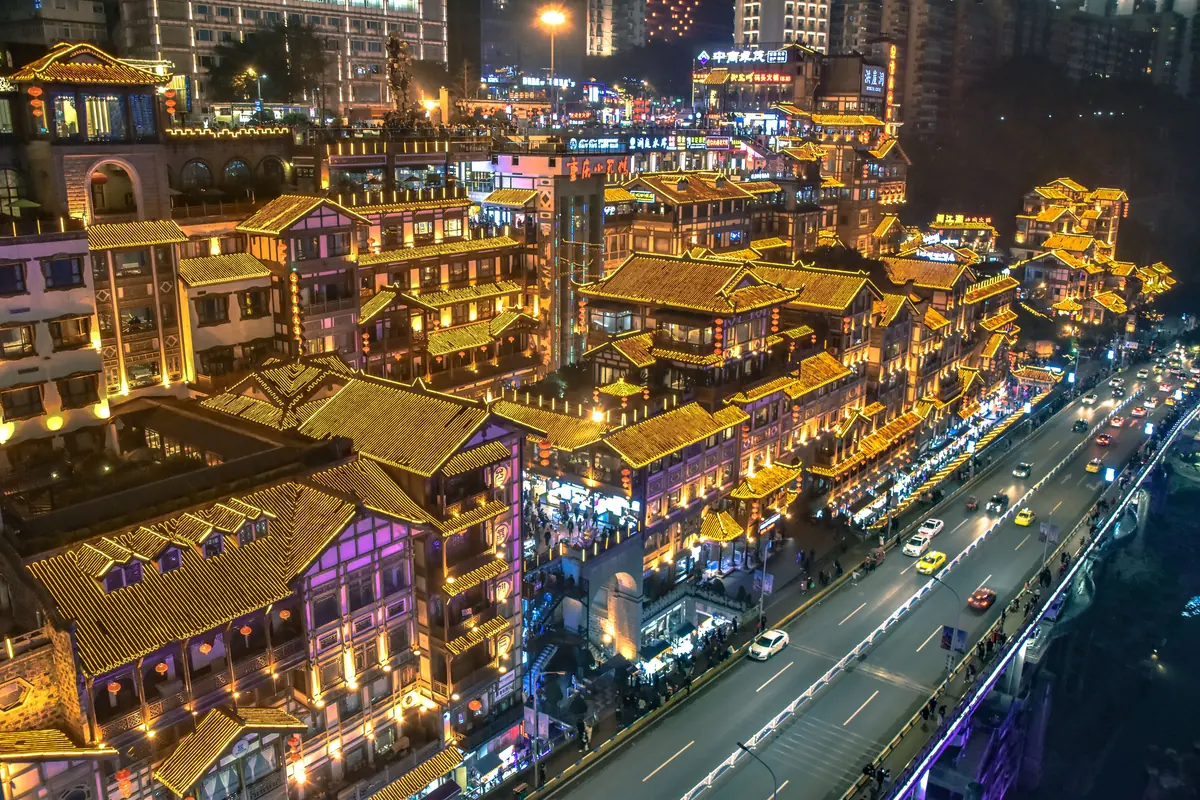
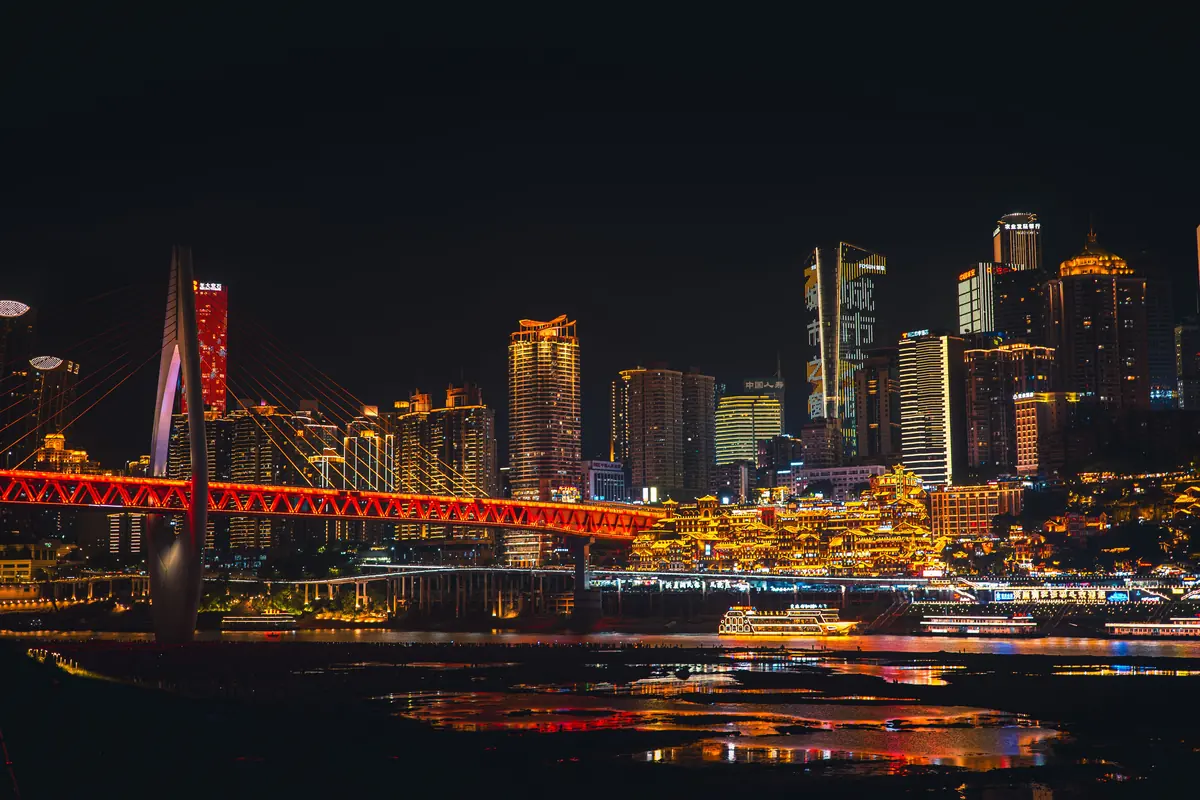
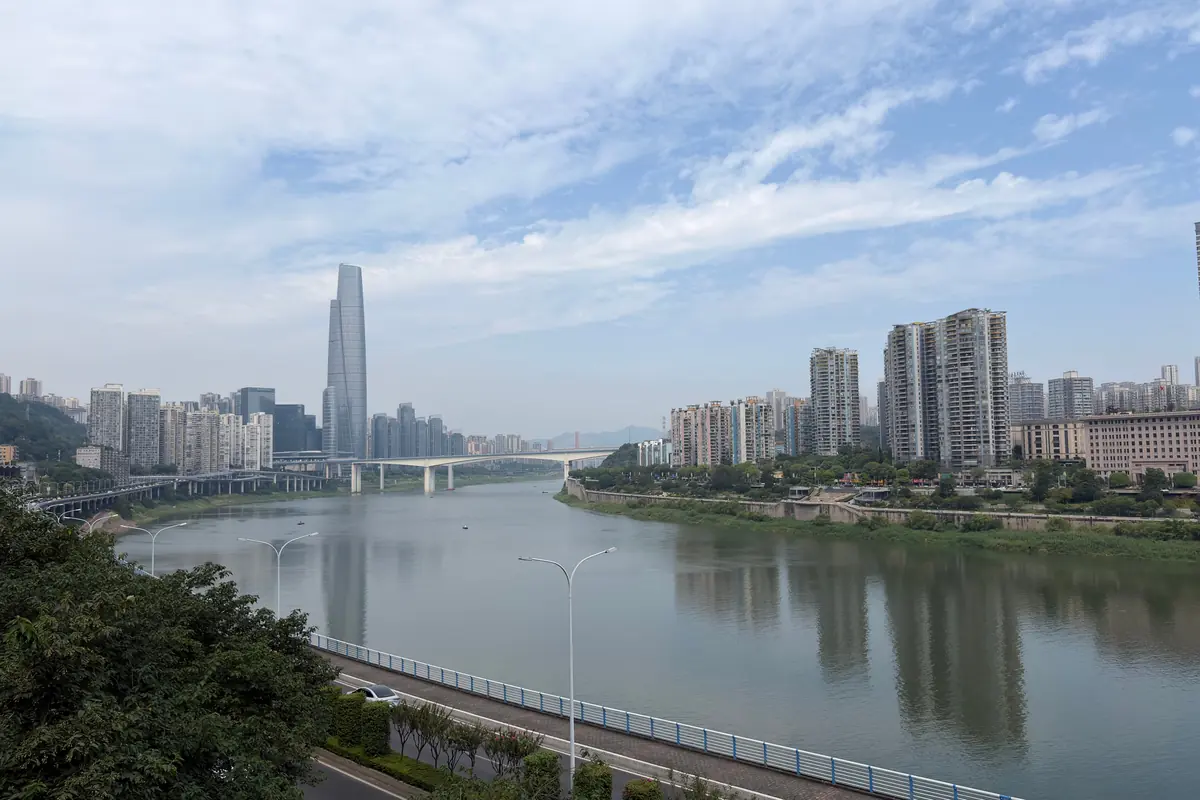
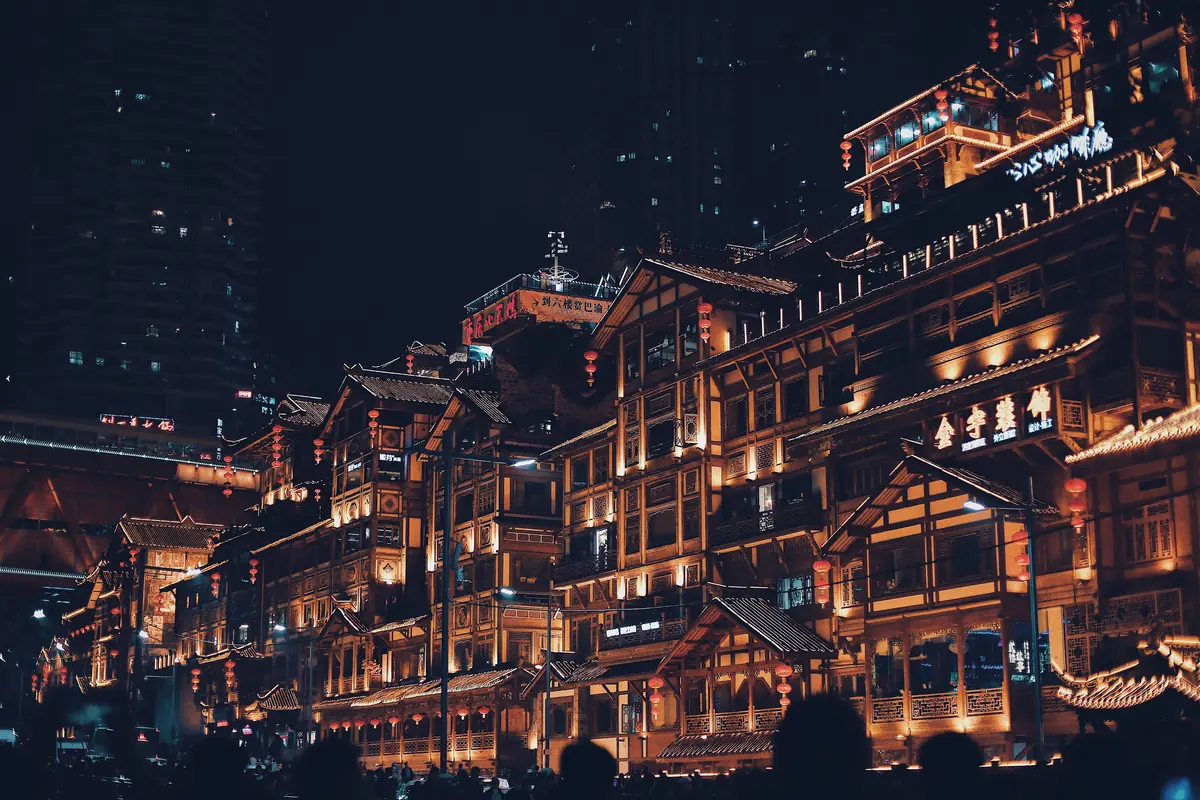
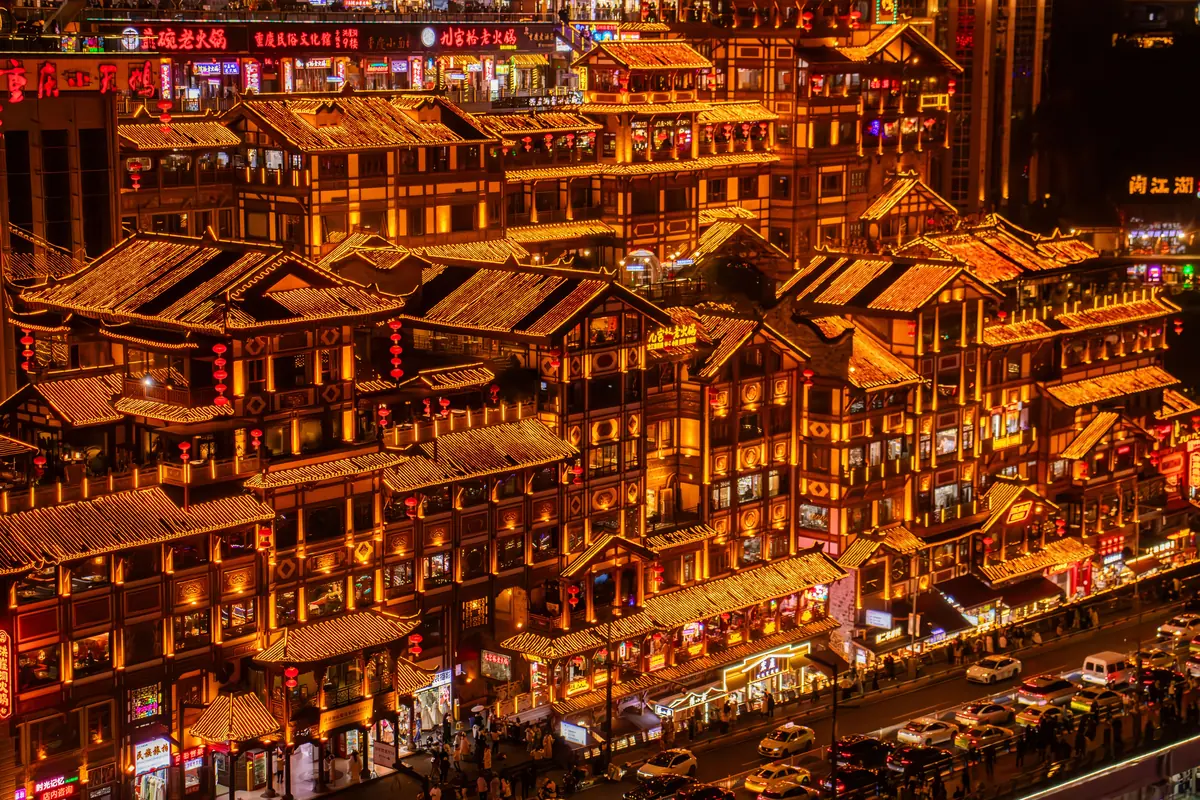
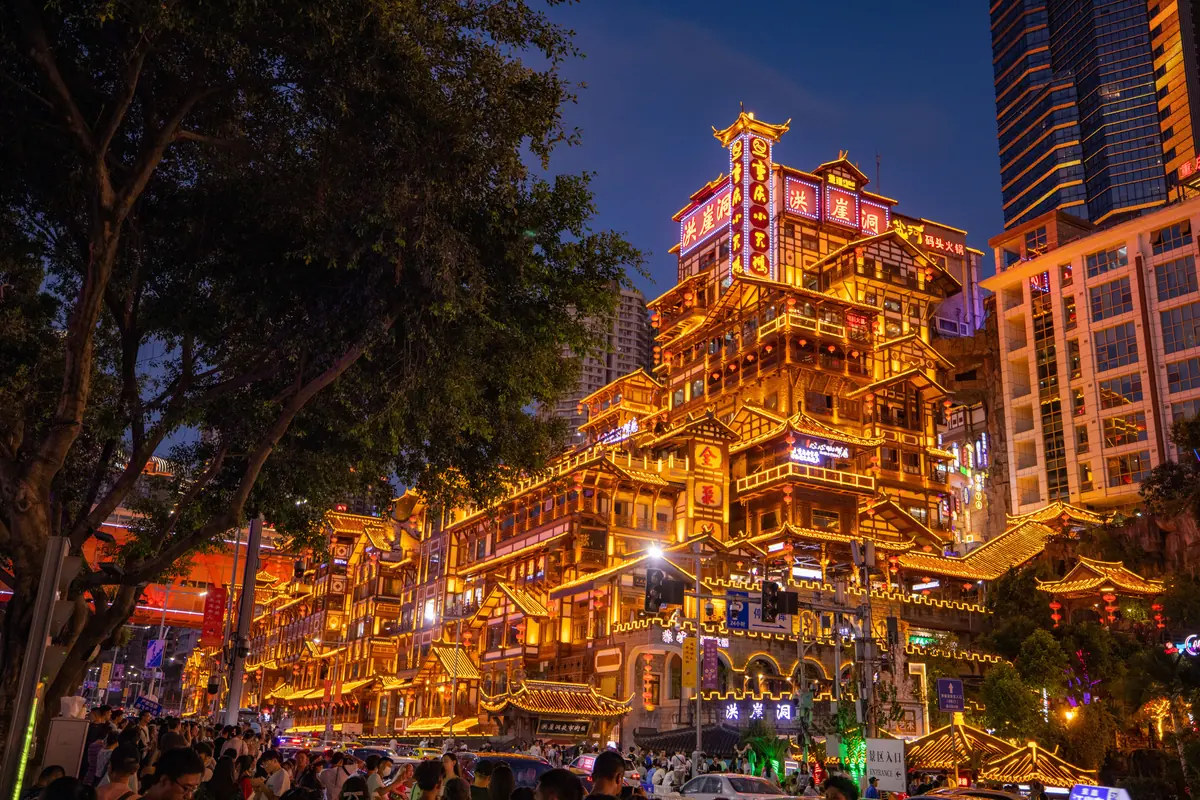
Photographs of Chongqing's riverfront at night: Hongya Cave, the stilt-style complex on the Jialing River, its bridges and its skyline. They show the city outside, not the theatre's interior.
The ticket and its extras
| Option | What it is | Who it suits |
|---|---|---|
| Show ticket | Entry to the Chongqing 1949 show, about 75 minutes at the Chongqing 1949 Grand Theater. Start times are in the calendar, and the ticket is marked skip the ticket line. | People who only need the performance and plan their own route there. |
| English headset | A translation device rented at the theatre. The ticket text says rental is free with a deposit of 150 yuan per person, paid in cash, by WeChat Pay or by Alipay, and refunded on return. | Visitors who do not follow Chinese and want the dialogue explained. |
| Turning or fixed seats | A travel guide describes seats that turn with the stage in the front sections and fixed seats behind them. The ticket text calls the rotating stage optional, so check what your date offers. | Choose turning seats for the full effect and fixed seats for a steady view. |
Book the show
The ticket below opens the Chongqing 1949 show at its own theatre in Ciqikou. The calendar on the booking page has the final word on dates, start times and seat options.
Entry to the Chongqing 1949 show, about 75 minutes at the Chongqing 1949 Grand Theater. Start times are in the calendar, and the ticket is marked skip the ticket line.
See dates ↗More evenings and days out in Chongqing
Before you go
Search 重庆1949大剧院 in your map app and show the same name to a taxi or ride-hailing driver. The Chongqing Grand Theatre is a different building, and the metro station to look for is Ciqikou.
The show's visitor guide advises being there 30 minutes or more beforehand, to find your seat, rent a headset and see the lobby. The performance runs about 75 minutes with no interval.
The ticket page advises having a WhatsApp or WeChat number and warns that the QR code on the GetYourGuide voucher is not the entry code. The correct code arrives by chat and by email, so follow that message.
English translation devices are collected at the main lobby reception. The ticket text asks for a deposit of 150 yuan per person, returned when you hand the device back. Some guests find the audio hard to hear, so read the story outline first.
Photography and videography are not permitted during the performance, according to the show's visitor guide. Take your pictures of the building and the lobby before the show.
Starting times appear once you check availability, and that calendar is the only schedule that counts. Choose a date that leaves you time to reach Ciqikou without rushing.
Guides to the show, Ciqikou and the rivers
 Booking
 How to book the Chongqing 1949 immersive show: what the ticket covers, seats that turn or stay fixed, English headsets, and who the show is not for.
Read the guide → Getting there How to reach the Chongqing 1949 Grand Theater in Ciqikou: the address in Chinese for your driver, the Grand Theatre mix-up, arrival time and the rules inside.
Read the guide →FAQ
The ticket page gives 75 minutes, and some other sources say 70. The show's visitor guide says there is no interval. Each date in the calendar has its own start time.
Not in the performance. The theatre rents English translation headsets, and the ticket text says the rental is free with a deposit of 150 yuan per person. Some guests find the audio hard to hear.
No. The show's visitor guide says its visual and emotional content crosses language barriers. Reading the four story threads in the story guide beforehand makes the headset easier to follow.
No. 999 Jinbi Zhengjie, Ciqikou, Shapingba District, Chongqing. It is not the Chongqing Grand Theatre, a separate opera house in Jiangbei.
Not during the performance. Photography and videography are not permitted, according to the show's visitor guide. Take pictures of the building and the lobby before the show.
A travel guide says some seats turn with the stage and others are fixed. The ticket text calls the rotating stage optional, so check the options for your date on the booking page.
The ticket page warns that the GetYourGuide QR code is not the entry code. The correct code is sent by chat and by email after you book, so follow that message.
It is set in Ciqikou on the eve of Chongqing's liberation in 1949, as the production tells it. An encyclopedia entry lists four threads, from three brothers' choices to the children of the prison.
The fare on this page is per person in US dollars; the booking page converts it into your own currency.